.png)
Computational Physics combines computer science and physics to solve complex problems. It uses numerical methods to analyze physical systems.
In the modern world, many scientific advancements rely on computational physics. This field uses algorithms and simulations to understand phenomena that are difficult to study experimentally. For example, predicting weather patterns or modeling the behavior of particles at the atomic level.
By bridging the gap between theory and experiment, computational physics provides insights that are otherwise hard to obtain. It has applications in various areas including astrophysics, material science, and fluid dynamics. Understanding computational physics can help you appreciate the intricate workings of nature and the universe. It offers a powerful toolset for scientists and researchers to explore new frontiers in science.
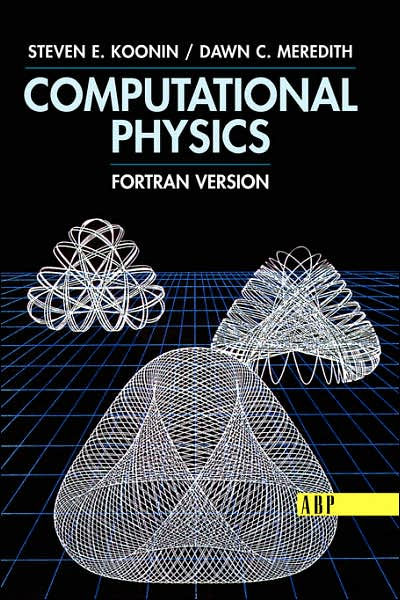
Credit: www.hachettebookgroup.com
Introduction To Computational Physics
Computational Physics is a fascinating and dynamic field that uses the power of computers to solve physical problems. Imagine being able to predict the behavior of galaxies or the properties of new materials before they are even created! This blend of physics, mathematics, and computer science provides powerful tools for researchers and engineers alike.
Brief History
The roots of Computational Physics can be traced back to the mid-20th century. During World War II, the first computers were used for complex calculations. These early machines, though primitive by today's standards, laid the groundwork for the sophisticated simulations we use now.
In the 1950s and 1960s, physicists began to recognize the potential of computers. They started using them to solve problems that were previously intractable. The development of algorithms and numerical methods during this period was crucial. It allowed scientists to tackle a wide range of problems, from fluid dynamics to quantum mechanics.
Fast forward to today, and Computational Physics is an essential part of scientific research. The evolution of hardware and software has made it possible to simulate complex systems with high accuracy. It's incredible to think how far we've come in just a few decades!
Importance In Modern Science
Computational Physics plays a critical role in modern science. It allows researchers to test theories and models without the need for expensive or dangerous experiments. Consider the simulations used in climate science to predict future weather patterns. These models help us understand potential impacts and prepare for changes.
In medicine, computational models are used to design new drugs. By simulating how molecules interact with biological systems, researchers can identify promising compounds faster. This not only speeds up the drug development process but also reduces costs.
Engineering also benefits greatly from Computational Physics. Structural simulations can predict how buildings and bridges will respond to stress and environmental factors. This ensures safety and efficiency in design. Have you ever wondered how car manufacturers test crash scenarios without actually crashing the cars? That's right, through advanced simulations!
What excites me the most is the potential for discovery. By simulating scenarios that are impossible to recreate in the real world, we can uncover new physical phenomena. How cool is that?
So, what are your thoughts? Are there areas in your field where computational methods could make a difference? Dive into the world of Computational Physics and see the possibilities unfold before you!

Credit: www.wired.com
Key Concepts
Computational physics combines computer science with physics. It uses algorithms to solve problems. It models physical systems and predicts their behavior. This field is crucial for understanding complex phenomena. Let's explore key concepts in computational physics.
Algorithms And Models
Algorithms are step-by-step instructions for solving problems. In computational physics, they simulate physical processes. For instance, they can model the movement of planets. Algorithms help predict outcomes based on initial conditions.
Models are simplified representations of real systems. They focus on essential features. These models help scientists understand physical laws. For example, a model can represent the weather. It uses algorithms to predict future conditions.
Numerical Methods
Numerical methods solve mathematical problems using numbers. They are vital in computational physics. These methods approximate solutions that are hard to solve exactly. For example, they find the value of complex integrals.
Different methods are used for different problems. Some common methods are the finite difference method and the Monte Carlo method. The finite difference method solves differential equations. The Monte Carlo method uses random sampling to estimate solutions.
Applications In Research
Computational physics has vast applications in research. This field uses computers to solve complex physical problems. From simulating particle interactions to understanding quantum behaviors, computational physics plays a crucial role. Let's explore some key areas where computational physics is making a significant impact.
Particle Physics
Particle physics explores the smallest building blocks of the universe. Computational physics helps simulate particle collisions. These simulations help scientists understand fundamental forces and particles. The Large Hadron Collider (LHC) relies heavily on computational methods. They analyze massive amounts of data from particle collisions. This leads to discoveries about the universe's origins and structure.
Quantum Mechanics
Quantum mechanics deals with the behavior of particles at the smallest scales. Computational physics provides tools to solve quantum equations. These equations describe particles like electrons and photons. Simulations help predict outcomes of quantum experiments. They also aid in designing new materials with unique properties. Quantum computers, a hot research area, benefit greatly from these simulations. They promise faster solutions for complex problems.
Technological Advances
Technological advances have transformed the field of computational physics. These changes have opened new avenues for research and innovation. The rapid growth of technology has made complex calculations more manageable. This has allowed scientists to delve deeper into physical phenomena.
Supercomputers
Supercomputers play a crucial role in computational physics. They can process massive amounts of data quickly. This capability is essential for simulating complex physical systems. Researchers use supercomputers to model climate change, space phenomena, and material properties. These machines handle tasks that would take regular computers years to complete. This speed and power enable scientists to make accurate predictions.
Machine Learning
Machine learning is another technological advance in computational physics. It helps in analyzing large datasets efficiently. Machine learning algorithms can identify patterns and trends in data. This ability is crucial for making sense of complex physical systems. Scientists use these algorithms to study particle physics, quantum mechanics, and more. Machine learning accelerates research by automating data analysis. This saves time and resources, allowing more focus on critical discoveries.
Case Studies
Computational physics uses computers to solve complex physical problems. It combines physics, computer science, and mathematics. Let's explore some real-world examples of its application.
Astrophysics Simulations
Astrophysics simulations help us understand the universe. Scientists use these simulations to study stars, galaxies, and black holes. They create models of how these objects evolve over time.
For instance, simulations can show how galaxies form and merge. They also help predict cosmic events like supernovas. These models use data from telescopes and satellites. This data helps make the simulations more accurate.
Astrophysics simulations have improved our knowledge of space. They have explained many mysteries of the universe. This field continues to grow with better technology and data.
Climate Modeling
Climate modeling is another key area in computational physics. Scientists create models to predict weather and climate changes. They use these models to study global warming, storms, and sea levels.
Climate models use data from past weather patterns. They also include information about the Earth's atmosphere, oceans, and land. These models help us understand how human activities affect the climate.
Accurate climate models are vital for planning. They help governments and organizations prepare for future changes. By understanding potential impacts, we can take steps to protect our planet.

Credit: www.amazon.com
Challenges And Solutions
Computational Physics is a fascinating field that blends physics and computer science. It faces many challenges but also offers solutions. Understanding these challenges and solutions can help improve research and problem-solving.
Computational Limits
Computational Physics often deals with large data sets. These data sets can be hard to process due to hardware limitations. Computers have finite memory and processing power. This means complex simulations can be slow or impossible. Researchers must use smart algorithms to manage this. They break problems into smaller parts. Then solve each part step-by-step. This makes the computation more manageable.
Error Minimization
Errors in computational physics can skew results. Even small errors can grow in complex models. Careful planning can help reduce these errors. Using high-precision arithmetic is one way. Another method is to use error-checking algorithms. These algorithms find and correct mistakes. Regularly checking the data for consistency is also crucial. It ensures the results remain accurate.
Future Directions
Computational physics continues to shape our understanding of the universe. New trends and technologies emerge, pushing the boundaries of what we know. These advancements offer exciting opportunities for future research and development. Let's explore some of the key areas shaping the future of this field.
Emerging Technologies
Quantum computing promises faster calculations and new insights. It could solve complex problems beyond the reach of classical computers. This technology opens new doors for simulations and modeling in physics.
Artificial intelligence (AI) and machine learning (ML) also play a growing role. These tools can analyze vast amounts of data quickly. They help identify patterns and make predictions, assisting physicists in their research.
Interdisciplinary Research
Physics now intersects with other fields more than ever. Collaboration with biology, chemistry, and engineering leads to new discoveries. These interdisciplinary efforts enrich our understanding of complex systems.
For example, biophysics combines principles of physics and biology. It seeks to understand biological processes at the molecular level. This cross-disciplinary approach can lead to breakthroughs in medicine and technology.
Similarly, materials science benefits from computational physics. Researchers can design new materials with unique properties. These materials have applications in various industries, including electronics and aerospace.
Impact On Society
Computational Physics is not just a field for theoretical exploration; its real-world applications have a profound impact on society. The technology developed in this area drives innovations in healthcare, environmental conservation, and beyond. Let's dive into how Computational Physics is shaping our world.
Healthcare Innovations
Computational Physics is revolutionizing healthcare. Imagine the ability to simulate complex biological processes with precision. This technology helps predict how diseases progress and how treatments work.
For instance, computational models can forecast the spread of pandemics. This enables healthcare professionals to plan and respond effectively. What if you could predict a heart attack before it happens? Computational Physics makes early diagnosis possible, saving lives.
Environmental Conservation
Environmental conservation is another area where Computational Physics has made a significant impact. Accurate climate models help us understand and combat climate change. These models forecast weather patterns and predict natural disasters.
Consider the role of Computational Physics in managing natural resources. By modeling water flow and soil erosion, we can make informed decisions. How can we ensure sustainable agricultural practices? Computational Physics offers the tools to monitor and optimize crop yields.
Computational Physics is not just a scientific endeavor; it is a force for societal good. From healthcare to environmental conservation, its applications are vast and impactful. How do you think these advancements will shape our future?
Frequently Asked Questions
What Does A Computational Physicist Do?
A computational physicist uses computer simulations and algorithms to solve complex physical problems. They analyze data and create models to predict outcomes.
Is A Phd In Computational Physics Worth It?
A PhD in computational physics is worth it for those passionate about research, problem-solving, and advanced computation. It offers career opportunities in academia, industry, and research institutions. This degree provides valuable skills for high-paying jobs in technology, finance, and engineering sectors.
Does Computational Physics Pay Well?
Yes, computational physics offers competitive salaries. Experienced professionals can earn well, often above average industry standards. Salary varies by location and expertise.
What Is Taught In Computational Physics?
Computational physics teaches numerical methods, simulations, algorithms, and programming to solve complex physical problems. It combines physics, mathematics, and computer science to model and analyze physical systems.
Conclusion
Computational physics is a fascinating field. It blends physics, math, and computing. This discipline helps solve complex problems. Even beginners can find it exciting. The skills learned here are valuable. They apply to many careers. Keep exploring computational physics. It offers endless possibilities.
Stay curious, keep learning, and enjoy the journey.




0 Comments