.png)
Classical physics is the study of matter, energy, and their interactions. It forms the foundation of many scientific principles and technologies.
Understanding classical physics can help us grasp how the world works. It includes theories and laws developed before the 20th century. Newton's laws of motion, Maxwell's equations, and the laws of thermodynamics are part of classical physics. This field explains the behavior of objects from everyday life to the vast universe.
It is crucial for fields like engineering, astronomy, and chemistry. By learning classical physics, we gain insights into forces, motion, energy, and waves. It allows us to predict and explain natural phenomena. In this blog, we will explore the basics of classical physics and its significance in our daily lives.
Foundations Of Classical Physics
Newton's Laws of Motion are very important in physics. First law: An object will stay still or keep moving unless a force acts. Second law: Force equals mass times acceleration. Third law: For every action, there is an opposite reaction.
Mechanics studies how objects move and why they move. It includes kinematics and dynamics. Kinematics describes motion without forces. Dynamics explains motion caused by forces. Energy and momentum are key ideas in mechanics. Energy can be kinetic or potential. Momentum depends on mass and velocity. Both are conserved in isolated systems.

Credit: arstechnica.com
Electromagnetism
Maxwell's Equations describe how electric and magnetic fields interact. These equations are the foundation of electromagnetism. They show how charges create electric fields. Also, how changing magnetic fields create electric fields. These are essential for understanding how light and other waves travel.
Electromagnetic waves are waves of electric and magnetic fields. They move through space at the speed of light. Light, radio waves, and X-rays are examples. These waves do not need a medium to travel. They can move through a vacuum. This is why we can see the Sun's light. It travels through space to reach us.
Thermodynamics
The first law of thermodynamics states energy can't be created or destroyed. It can only change forms. The second law says heat flows from hot to cold. It also states energy spreads out over time. The third law says absolute zero is a point with no motion. This point is theoretical. Scientists study these laws to understand heat and energy.
Heat transfer happens in three ways: conduction, convection, and radiation. In conduction, heat moves through solids. For example, a metal spoon in hot soup. Convection involves liquids and gases. Warm air rises, and cool air sinks. Radiation transfers heat through space. The sun warming your face is an example. These methods explain how heat moves around us.
Credit: medium.com
Optics
The wave theory of light explains how light moves. Light travels in waves. These waves can bend around corners. They can also interfere with each other. This means light can create patterns. The wave theory helps us understand rainbows and mirrors. It also explains why the sky is blue. Light waves are very small. They move very fast. This theory is important for many sciences.
Geometrical optics focuses on light as rays. These rays travel in straight lines. They reflect off surfaces like mirrors. They also bend when passing through glass. This is called refraction. Geometrical optics is used in designing lenses. It helps in making glasses and cameras. It is also useful in telescopes. This study helps us see things clearly. It is very useful in everyday life.
Fluid Dynamics
Bernoulli's Principle explains how fluid pressure changes with fluid speed. Faster moving fluids have lower pressure. Slower moving fluids have higher pressure. This principle helps explain how planes fly. It also explains why roofs can lift off in strong winds. Fluids include both liquids and gases.
Navier-Stokes Equations describe how fluids move. They are a set of math equations. These equations are used in weather forecasting. They also help design airplanes and cars. These equations are complex. They involve velocity, pressure, density, and viscosity of fluids. Solving them requires powerful computers.
Acoustics
Sound waves are vibrations that travel through air or another medium. These waves create audible sounds. They can be high-pitched or low-pitched. The frequency of the wave affects the pitch. Fast vibrations make high sounds. Slow vibrations make low sounds.
The Doppler Effect happens with sound. It changes the pitch of the sound. This happens when the sound source moves. If it moves toward you, the pitch gets higher. If it moves away, the pitch gets lower. This is why a siren sounds different when it passes by.
Relativity
Special relativity is about how things move at high speeds. Albert Einstein created this theory in 1905. One big idea is that time and space are linked. If you move fast, time slows down for you. You also get heavier. This is why spaceships need a lot of energy. Light always moves at the same speed. Nothing can go faster than light.
General relativity is about gravity. Einstein made this theory in 1915. It says big objects bend space. This bending makes things move. The sun bends space around it. This is why planets go around the sun. Even light bends when it passes near big objects. This is called gravitational lensing. We can see this effect with stars and galaxies.
Credit: quantumatlas.umd.edu
Contributions Of Key Physicists
Isaac Newton made many important discoveries. He is known for the laws of motion. These laws explain how things move. Newton also discovered the law of gravity. This law explains why objects fall to the ground. Newton's work changed science forever.
James Clerk Maxwell was another great physicist. He created the theory of electromagnetism. This theory explains how electric and magnetic fields work. Maxwell's equations are used in many areas of science. His work helped in the development of modern technology.
Frequently Asked Questions
What Is Classical Physics?
Classical physics studies macroscopic phenomena using laws of motion and gravitation. It includes mechanics, thermodynamics, and electromagnetism.
Who Are The Key Figures In Classical Physics?
Key figures include Isaac Newton, James Clerk Maxwell, and Galileo Galilei. They made foundational contributions to mechanics and electromagnetism.
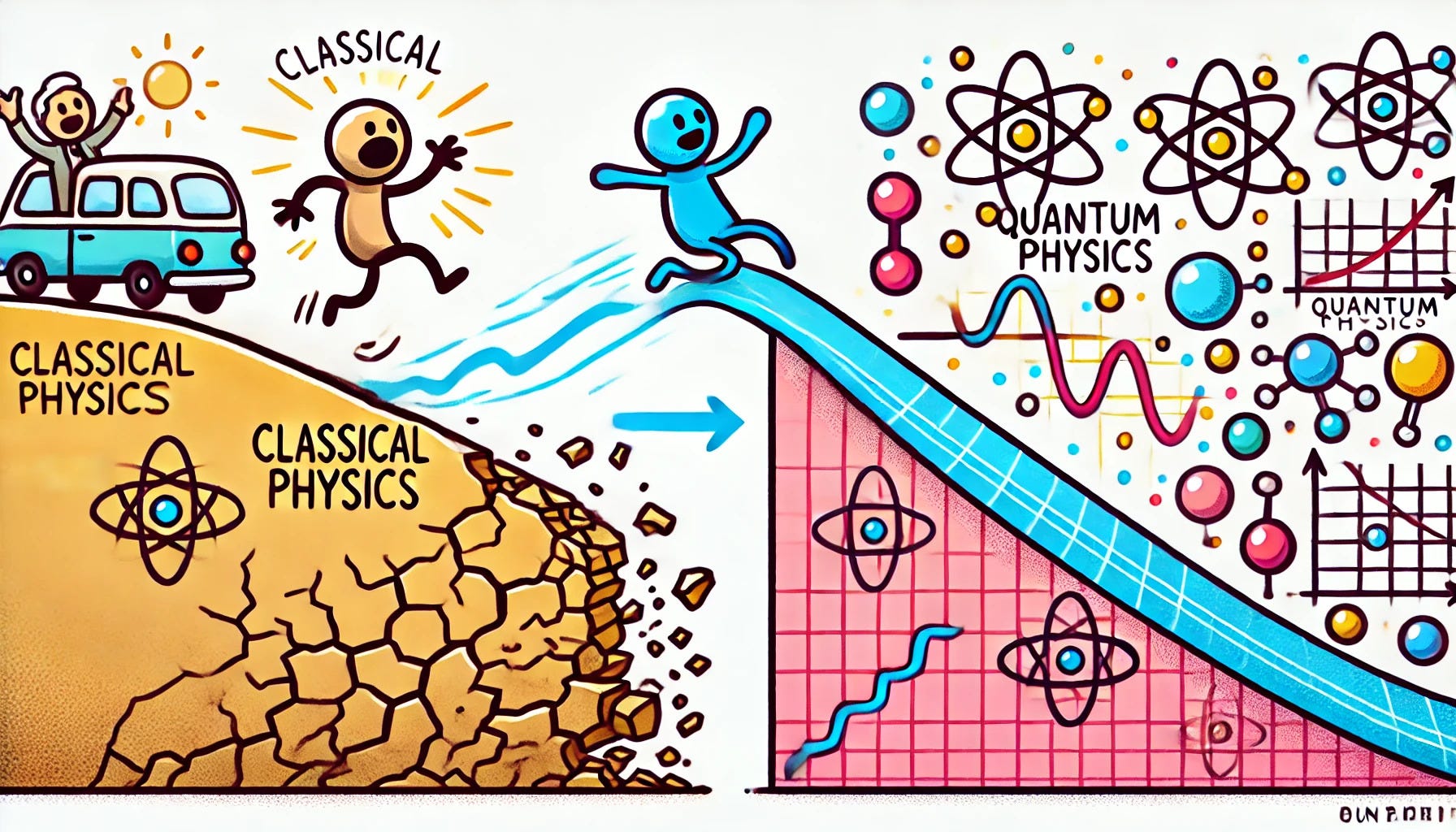
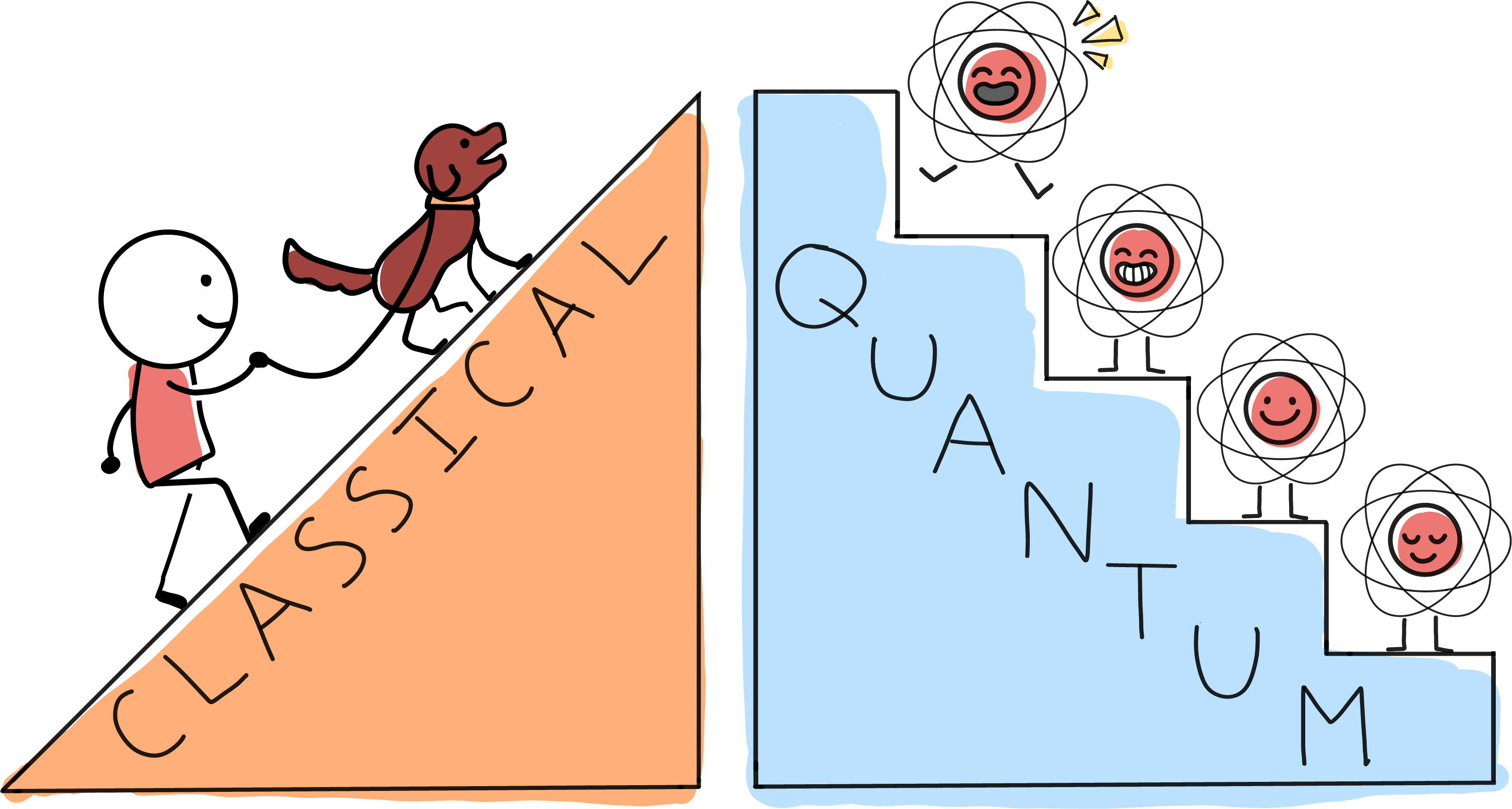
How Does Classical Physics Differ From Quantum Physics?
Classical physics deals with macroscopic objects and deterministic laws. Quantum physics focuses on subatomic particles and probabilistic behavior.
What Are The Laws Of Classical Mechanics?
The laws include Newton's three laws of motion. These laws describe the relationship between a body and the forces acting on it.
Conclusion
Classical physics has shaped our understanding of the world. Its principles explain everyday phenomena. From motion to electricity, it sets the foundation. This knowledge helps us grasp more complex science. While technology advances, classical physics remains vital. It serves as the backbone of modern physics.
Studying classical physics boosts critical thinking. It also deepens appreciation for nature's laws. So, keep exploring and learning. The journey through physics is never-ending. Understanding classical physics opens doors to new discoveries. Stay curious and engaged in this fascinating field.




0 Comments