.png)
Physics and Mathematics are two fundamental sciences. They shape our understanding of the universe.
Physics explores the nature of matter and energy. It helps us understand how things move and interact. Mathematics provides the language and tools to describe these interactions. Together, they form the backbone of scientific inquiry and technological progress. Understanding these subjects can seem daunting.
But their principles are essential in everyday life. From smartphones to space travel, Physics and Mathematics are everywhere. This blog will introduce you to the basics of these fascinating fields. You will discover their importance and how they influence the world around us. Get ready to dive into the wonders of Physics and Mathematics!
The Interplay Of Physics And Mathematics
Physics and mathematics are deeply intertwined. Mathematical equations describe physical phenomena precisely. This connection helps us understand the universe better.
Foundation Of Scientific Exploration
Historical Milestones
Credit: studentresearch.engineering.columbia.edu
Mathematics: The Language Of Physics
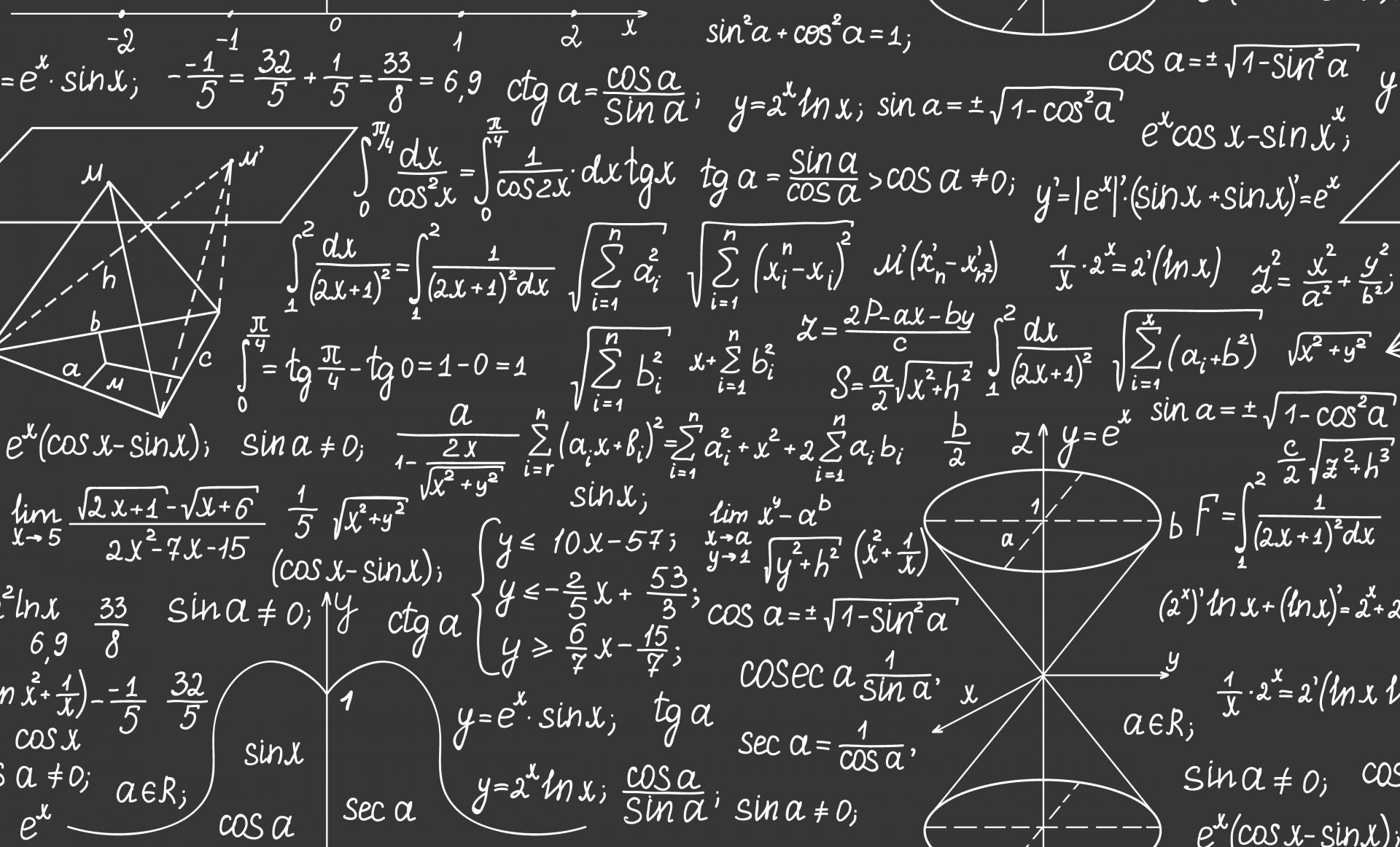
Mathematics is often called the language of physics. It allows scientists to express physical laws with precision. Without math, understanding the universe would be much harder. Equations and formulas help describe how things work. They give meaning to theories and concepts in physics.
Equations And Theories
Equations are the backbone of physics. They provide a way to test ideas. For example, Newton's laws of motion use equations. These equations predict how objects move. Einstein’s theory of relativity also relies on mathematical expressions. Each formula captures important physical relationships. This makes it easier to understand complex phenomena.
Theories in physics often start as mathematical ideas. They use equations to describe what might be true. Over time, experiments test these ideas. If the math holds up, the theory becomes accepted. This process shows the power of math in forming and proving theories.
Role In Predictive Models
Mathematics also plays a key role in predictive models. These models help forecast future events. In weather prediction, math models simulate the atmosphere. They use data to predict rain, storms, and other weather patterns. This helps people prepare for different conditions.
Physics uses predictive models in many ways. For example, in astronomy, models predict the movement of planets. They help scientists understand the universe better. Predictive models also help in engineering. They ensure buildings and bridges are safe. Math makes all these predictions possible.
Key Concepts In Physics
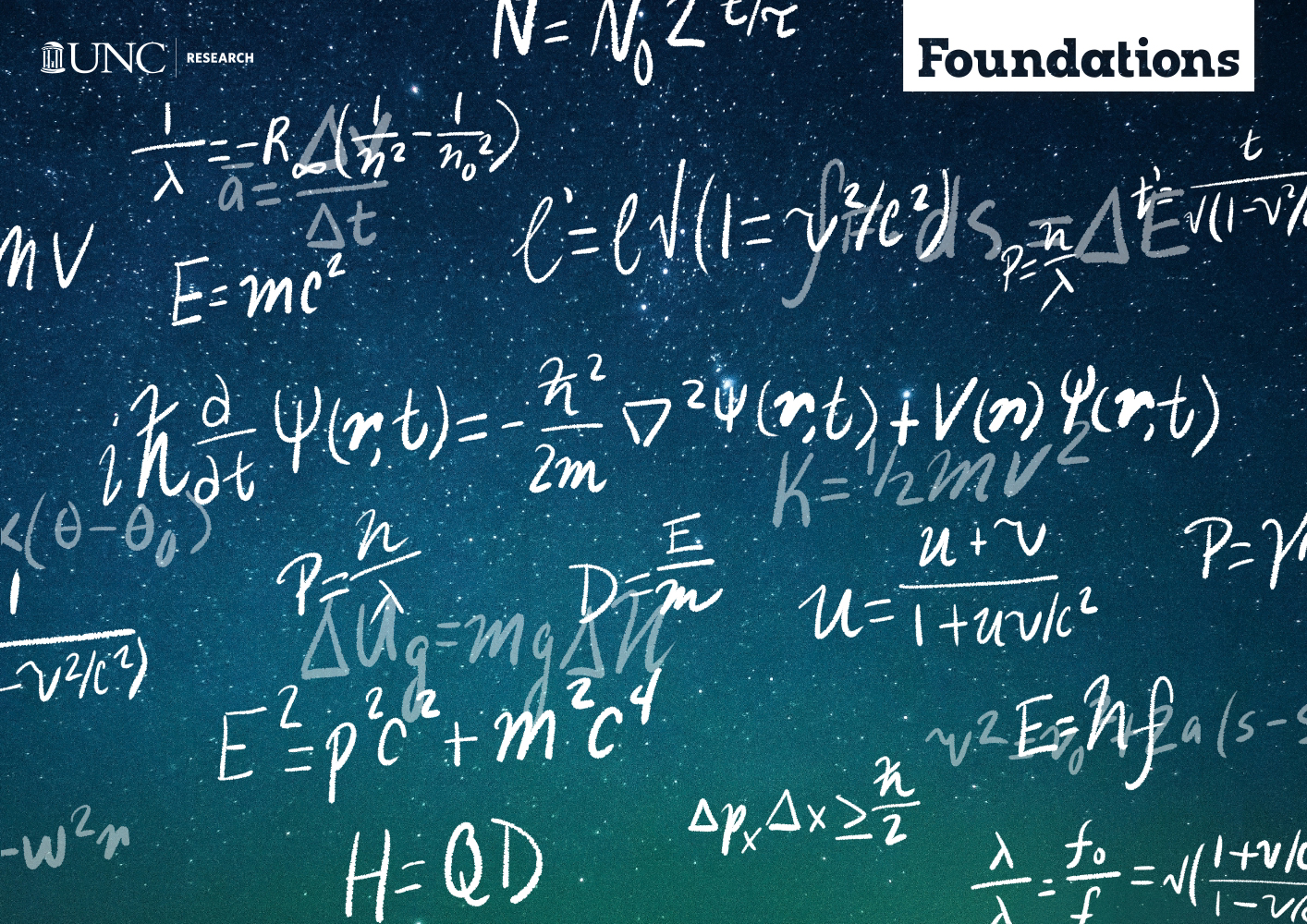
Physics and mathematics are deeply connected. Physics uses math to describe natural phenomena. Equations and formulas help explain how the world works.
Forces And Motion
Energy And Work
Credit: endeavors.unc.edu
Mathematical Tools In Physics
Physics and mathematics are deeply intertwined. Mathematical tools are essential for understanding physical phenomena. These tools help explain the universe's behavior. They provide a framework for formulating and solving problems. Below, we explore some key mathematical tools in physics.
Calculus And Differential Equations
Calculus is crucial in physics. It helps describe change and motion. Calculus includes derivatives and integrals. Derivatives measure how quantities change. Integrals sum up quantities over a range. Differential equations use these concepts. They model dynamic systems in physics.
For instance, Newton's laws of motion use differential equations. They describe how objects move. Maxwell's equations in electromagnetism are another example. They explain electric and magnetic fields. Calculus and differential equations are fundamental in physics. They help predict how systems evolve over time.
Linear Algebra And Matrices
Linear algebra is another important tool. It deals with vectors and matrices. Vectors represent quantities with direction and magnitude. Matrices are arrays of numbers. They represent linear transformations. Linear algebra simplifies complex problems in physics.
For example, quantum mechanics uses linear algebra. It describes the behavior of particles at the atomic level. Matrices help solve systems of linear equations. This is useful in many areas of physics. Linear algebra provides a structured way to handle large amounts of data.
Both calculus and linear algebra are vital in physics. They offer powerful methods to analyze physical systems. Understanding these tools enhances our comprehension of the physical world.
Quantum Mechanics And Mathematics
Quantum mechanics and mathematics intersect deeply, forming the backbone of modern physics. Mathematical concepts help explain complex quantum phenomena, making them essential for scientific progress.
Wave-particle Duality
Heisenberg's Uncertainty Principle
Relativity And Geometry
Relativity and geometry are two fascinating concepts that merge to explain the nature of our universe. Relativity, developed by Albert Einstein, revolutionized our understanding of time and space. Meanwhile, geometry has been a fundamental branch of mathematics, used to describe shapes, sizes, and the properties of space. Together, they form the backbone of modern physics, providing insight into how the universe operates at both large and small scales.
Special And General Relativity
Einstein's theory of relativity comes in two parts: special relativity and general relativity. Special relativity addresses the physics of objects moving at constant speeds, especially those moving close to the speed of light. It introduced the idea that time and space are interconnected, forming what we now call spacetime.
Have you ever wondered why GPS systems need to account for time dilation? This is a direct application of special relativity. Satellites orbiting Earth experience time a bit differently than we do on the ground.
General relativity, on the other hand, deals with gravity and acceleration. It proposes that massive objects like planets and stars warp the fabric of spacetime. This curvature of spacetime is what we perceive as gravity. This theory has been confirmed by numerous experiments and is essential for understanding phenomena like black holes and the expansion of the universe.
Curvature Of Spacetime
The concept of spacetime curvature can be tricky, but it's crucial for grasping general relativity. Imagine placing a heavy ball on a trampoline. The ball causes the trampoline to sag, creating a curved surface. In a similar way, massive objects like Earth curve the spacetime around them.
This curvature affects the paths of objects moving nearby. Light, for example, bends when it passes close to a massive object. This phenomenon is known as gravitational lensing and has been observed in distant galaxies.
You can actually see this effect in action by looking at images from telescopes. When you see a galaxy that looks stretched or distorted, that's the curvature of spacetime at work. It's a powerful tool for astronomers to study the universe's structure and the distribution of dark matter.
Understanding the curvature of spacetime not only helps us comprehend gravity but also opens up questions about the universe's fundamental nature. Is spacetime finite or infinite? Does it have a shape we can describe? These are questions that continue to drive research in physics and mathematics.
Relativity and geometry are more than just abstract concepts; they shape our understanding of reality. They challenge us to think beyond everyday experiences and explore the universe's true nature. By diving into these topics, you gain a deeper appreciation of the cosmos and your place within it.
What do you think about the idea that time and space are interconnected? How does it change your perspective on the universe?
Modern Physics And Mathematical Innovations
Modern physics and mathematical innovations have revolutionized our understanding of the universe. They tackle profound questions and reveal mysteries that were once beyond our grasp. These advancements are not just theoretical; they have practical implications that can reshape our daily lives.
String Theory
String Theory is one of the most fascinating developments in modern physics. It proposes that the fundamental particles of the universe are not point-like dots, but rather tiny, vibrating strings. This idea could unify all the forces of nature, including gravity.
Think of it this way: if we can understand these strings, we might solve some of the biggest puzzles in physics. This theory suggests a universe with multiple dimensions beyond our three-dimensional experience. It’s a mind-bending concept, but it opens up endless possibilities for new discoveries.
Dark Matter And Dark Energy
Dark Matter and Dark Energy are two of the most mysterious components of our universe. You can't see them, but they make up about 95% of the universe's total mass and energy. Imagine trying to solve a puzzle when most pieces are invisible!
Dark Matter acts like an invisible glue, holding galaxies together. Without it, stars would fly apart. Dark Energy, on the other hand, is driving the universe’s accelerated expansion. Understanding these forces could unlock new technologies and deepen our comprehension of the cosmos.
Have you ever wondered if there’s more out there than we can see? The quest to understand Dark Matter and Dark Energy may reveal answers to questions we haven’t even thought to ask yet. What do you think? Will we ever fully understand these cosmic mysteries?

Credit: www.linkedin.com
Future Directions
The fields of physics and mathematics are constantly evolving. Researchers are eager to explore new horizons and answer age-old questions. As we look to the future, there are several exciting directions that these disciplines may take. These future directions promise to expand our understanding of the universe and improve our daily lives.
Unresolved Mysteries
Many questions in physics and mathematics remain unanswered. Dark matter and dark energy are prime examples. Scientists have yet to understand their true nature. These mysterious substances make up most of the universe. Yet, we know very little about them. Exploring these mysteries could reveal new physics principles.
Mathematicians also face unanswered questions. The Riemann Hypothesis is one such challenge. It has puzzled experts for over a century. Proving or disproving it could lead to a deeper understanding of number theory. Solving these mysteries requires creativity and collaboration. The future holds many possibilities for new discoveries.
Interdisciplinary Research
Interdisciplinary research is becoming more common. Combining physics and mathematics with other fields yields new insights. For example, researchers use mathematical models to study biological systems. This helps us understand complex processes in living organisms. Such models can lead to breakthroughs in medicine and healthcare.
Similarly, physics principles help improve technology. Quantum computing is a prime example. This field merges physics and computer science. It promises to revolutionize data processing. Interdisciplinary research breaks down barriers between fields. It encourages collaboration and innovation. The future of physics and mathematics depends on these cross-disciplinary efforts.
Frequently Asked Questions
How Is Physics Related To Mathematics?
Physics uses mathematical formulas to describe natural phenomena. Mathematics provides the language for physics theories and models.
What Kind Of Math Is Used In Physics?
Physics uses algebra, calculus, trigonometry, and statistics. These branches help explain concepts like motion, forces, energy, and waves.
Is Maths And Physics A Good Combination?
Yes, maths and physics make a great combination. These subjects complement each other and enhance analytical skills. Many scientific careers benefit from this pairing.
Can I Do Physics If I'm Bad At Math?
Yes, you can study physics if you're not strong in math. Focus on conceptual understanding first. Seek help with math as needed.
Conclusion
Physics and mathematics shape our world in profound ways. They explain natural phenomena and solve complex problems. These subjects train our minds to think critically and logically. Learning them enhances problem-solving skills. They are essential in many careers, from engineering to finance.
Understanding physics and mathematics can be rewarding and enriching. Start exploring these fascinating fields today.




0 Comments