.png)
Physics is the study of matter, energy, and the forces that shape our universe. It explains how things move and interact.
Understanding the fundamentals of physics is essential for grasping how the world works. From the tiniest particles to the largest galaxies, physics principles are everywhere. This branch of science helps us understand everyday phenomena and complex systems. Why does an apple fall to the ground?
How does electricity power our homes? Physics provides the answers. It covers a wide range of topics, from motion and forces to energy and waves. By exploring these concepts, we gain a deeper appreciation for the natural world and its workings. Ready to dive in? Let's explore the fascinating world of physics together.
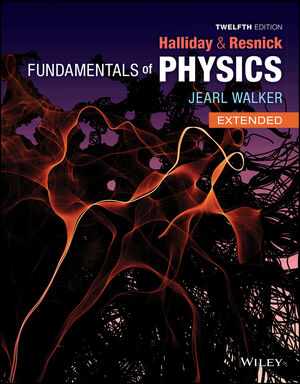
Credit: www.wiley.com
Introduction To Physics
Physics is the study of the natural world. It explains how things move and interact. Scientists use physics to understand the universe. This field explores many concepts. These include energy, force, and matter. Physics uses experiments to test ideas. Its findings help us understand the world.
Physics is important in daily life. It helps us use technology better. Phones, cars, and computers rely on physics. Medicine also uses physics. Doctors use machines based on physics. Physics helps solve problems. It improves our lives.

Credit: www.amazon.com
Classical Mechanics
Newton's Laws of Motion explain how objects move. The first law says an object stays still or moves in a straight line unless a force acts on it. The second law shows how force, mass, and acceleration are connected. More force means more acceleration. The third law states every action has an equal and opposite reaction. Push a wall, and it pushes back.
Work is done when a force moves an object. Energy is the ability to do work. There are many types of energy. Kinetic energy comes from movement. Potential energy is stored. Power measures how fast work is done. It is the rate of doing work. Power is measured in watts.
Thermodynamics
The First Law of Thermodynamics states that energy cannot be created or destroyed. Energy can only change forms. The Second Law says that heat flows from hot to cold areas. This increases the disorder, or entropy. The Third Law states that as temperature approaches absolute zero, the entropy of a system approaches a constant value.
Heat moves in three ways: conduction, convection, and radiation. Conduction happens in solids. Heat moves from one particle to another. Convection occurs in fluids. Warm fluid rises, cold fluid sinks. Radiation transfers heat through empty space. The Sun's heat reaches Earth this way.
Electromagnetism
Electric fields are regions where electric forces act on charges. These fields are created by electric charges. Positive charges push away from other positive charges. Negative charges pull towards positive charges. The strength of the electric field depends on the charge size. Stronger charges create stronger fields. Electric fields are shown using arrows. The direction of the arrow shows the direction of the force on a positive charge. Understanding electric fields helps in studying circuits and other phenomena.
Magnetic fields are areas around magnets where magnetic forces are felt. These fields are caused by moving electric charges. Magnets have a north and south pole. Opposite poles attract each other. Like poles repel each other. Magnetic fields are shown with lines. The lines go from the north pole to the south pole. Induction happens when a changing magnetic field creates an electric current. This principle is used in transformers and electric generators.
Optics
Light is a form of energy. It travels in straight lines. We call this behavior rectilinear propagation. Light can travel through air, water, and space. It moves very fast, about 300,000 kilometers per second. Light can be seen by our eyes. It allows us to see the world. Light has different colors. These colors make up the spectrum. The spectrum includes red, orange, yellow, green, blue, indigo, and violet. Light is both a wave and a particle. This dual nature is important in physics.
Reflection happens when light bounces off a surface. Mirrors reflect light very well. The angle of incidence is equal to the angle of reflection. This is the law of reflection. Refraction occurs when light passes from one medium to another. It changes direction. Glass and water can refract light. Lenses use refraction to focus light. This helps us see clearly. Both reflection and refraction are key concepts in optics.
Quantum Mechanics
Light behaves like waves and particles. This is called wave-particle duality. Sometimes light acts like a wave. It can spread out and interfere. Other times, it acts like a particle. It can hit objects like tiny balls. Electrons also show this behavior. They can move like waves but also collide like particles. This dual nature is fundamental. It helps us understand the quantum world.
The uncertainty principle is key in quantum mechanics. It says we can't know everything about a particle. For example, we can't know both position and speed exactly. If we know one, we know less about the other. This principle shows the limits of our measurements. It is a core idea in understanding quantum behavior.
Relativity
Special relativity is a key part of physics. It was proposed by Albert Einstein in 1905. This theory changes our view of space and time. It tells us that the laws of physics are the same for all. No matter their speed, the rules don't change. Time and space are linked together. This is called space-time.
Moving objects are shorter and heavier. They also experience time slower. This is called time dilation. Light always travels at the same speed. Even if you move fast, light's speed does not change. This is a strange and important idea.
General relativity is another theory by Einstein. It builds on special relativity. This theory explains gravity. Gravity is not a force but a bend in space-time. Mass and energy can bend space-time.
Large objects like the Earth cause a big bend. This bend makes smaller objects move towards them. This is why we stay on the ground. It's also why the planets orbit the sun. The sun bends space-time a lot. This theory has been tested many times. It always works.
Modern Physics
Atoms are tiny. They make up everything. Each atom has a nucleus. The nucleus contains protons and neutrons. Around the nucleus, electrons move. Electrons are very small. They orbit in shells. The number of protons defines the element. For example, hydrogen has one proton. Helium has two protons. Atoms are mostly empty space. The nucleus is very dense.
Nuclear physics studies the nucleus of atoms. It explores nuclear forces and reactions. One important reaction is fission. Fission splits a nucleus. Another is fusion. Fusion joins two nuclei. These reactions release energy. Nuclear power plants use fission. The sun uses fusion. Nuclear physics helps in medicine too. Radiation therapy treats cancer. It uses radioactive materials.
Practical Applications
Physics helps build new gadgets. Computers use electricity and magnetism to work. Smartphones rely on wireless signals. Cars have engines that use thermodynamics. Even the internet needs fiber optics. All of these come from physics.
Physics is everywhere. Turning on a light uses electricity. Cooking food involves heat. Riding a bike shows motion and balance. Even playing sports uses force and energy. Physics makes our daily tasks possible.

Credit: en.wikipedia.org
Frequently Asked Questions
What Are The Basics Of Physics?
Physics explores matter, energy, and the fundamental forces of nature. It includes the study of motion, heat, light, and electromagnetism.
Why Is Physics Important In Everyday Life?
Physics helps us understand natural phenomena and develop technologies. It's crucial for innovations like computers, medical devices, and energy solutions.
How Does Physics Relate To Other Sciences?
Physics provides foundational principles for other sciences like chemistry, biology, and astronomy. It explains atomic structures, biological processes, and cosmic events.
What Is The Role Of Mathematics In Physics?
Mathematics is the language of physics. It helps describe physical laws, solve equations, and predict outcomes accurately.
Conclusion
Physics forms the basis of our understanding of the universe. It explains how things move, interact, and change. Grasping these fundamentals helps us in everyday life. From turning on a light to using a smartphone, physics is involved. Remember, learning these basics can be fun and enlightening.
Keep exploring and asking questions. The world of physics is vast and exciting. Dive deeper and enjoy the journey!




0 Comments